My 6-Week Experience in Madagascar
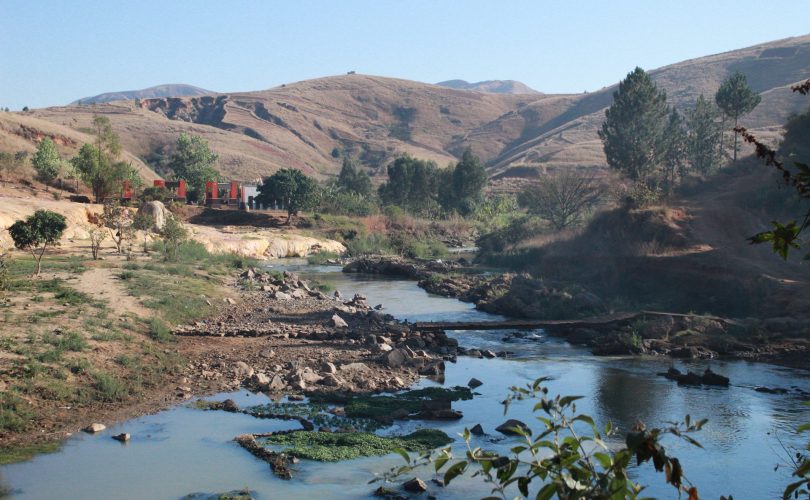
I am so excited to share my 6-week invaluable experience in Madagascar! As it was part of a study abroad program, I was not able to travel to other parts of Madagascar on my own. Nonetheless, I learned so much about the country and culture and formed extremely fond memories. This post will center around that learning while I was there. Of course, after only six weeks, there is a countless amount more to learn, but I still really wanted to share.
Week 1:
For the first week, we stayed in a hotel called Villa Manongarivo before moving to our Malagasy home stays. I would recommend this hotel to anyone visiting Tana. It was in a beautiful location slightly outside of Tana, the gated area felt very safe, and the staff were incredibly friendly. I also loved it here because it felt like a glimpse of a summer camp experience I never had as a kid; all ten students played card games and talked late into the night, laughed in our bunk beds, and woke up to share breakfast together. We also started our Malagasy lessons here along with our academic lectures.
TIP: People in Madagascar speak Malagasy with each other. While most people learn French in elementary school and can speak fluently, it is not their primary language. However, when Malagasy see a group of foreigners, I found that, generally, they try to communicate in French. None of the students in our group spoke much French, so learning Malagasy felt like an important way to show respect. Additionally, the basics were surprisingly easy to pick up! I recommend the Peace Corp Introductory to Malagasy Language, but here are some basics with pronunciation guidance:
- Salama = hi/hello
- Tonga soa (tongah su-ah) = Welcome
- Misaotra (Mee-soh-tra or Mee-sow-tra) = thank you
- Azafady (asah-fah-dee) = excuse me/please
- Tsara (the ts makes the same sound as the z in “pizza”; tzah-rah) = good/great
- Tsara be (beh)
- Adding “be” to any adjective exaggerates it
- [Your name] no anarako (nu anahr-ah-ku) = My name is ____
- Inona no vaovao? (Ee-nuna nu vow-vow) = what’s up?
- Very common! You can say this to anyone!
- Tsy misy, ary ianoa? (zee mih-see, ah-ree yah-now) = nothing special, and you?
- Very common response to “Inona no vaovao?”
- Avy any ______ aho (avee anee ___ ah-hoh) = I am from ______
Week 2-3:
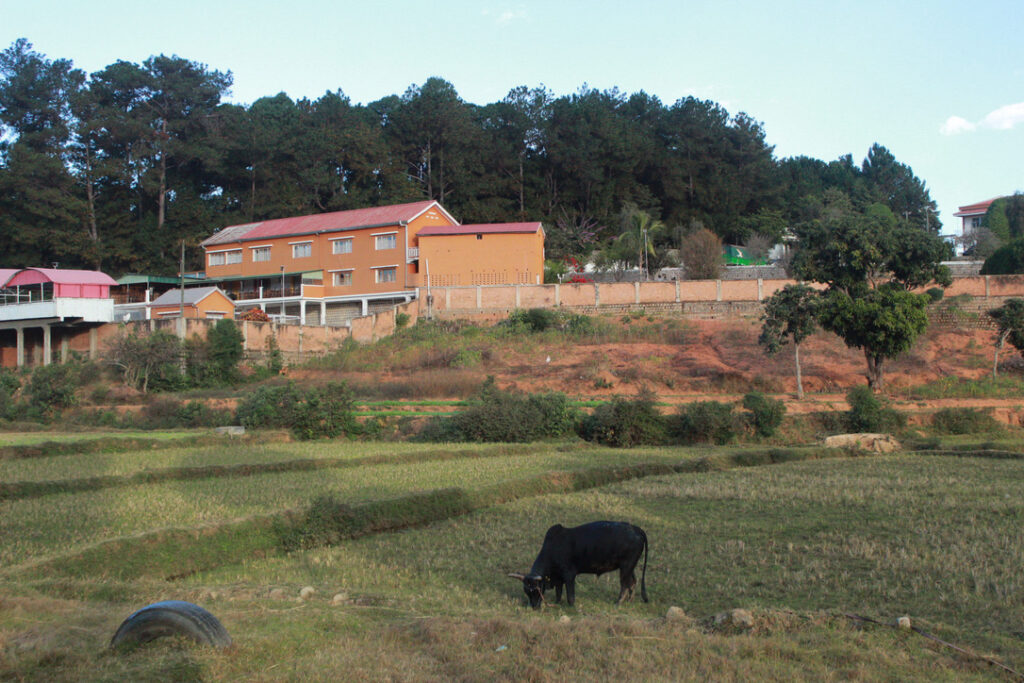
After the first week, we moved to our home stays with Malagasy families! These houses were all in the neighborhood of Ivandry, which seemed to be one of the safer areas of Tana. The nearby mall, La City, had a coffee shop with WiFi, a grocery store that was relatively expensive, and a tasty food court. We would come here after school sometimes to work on assignments.
Meals with my host family were usually a mix of meat, cooked vegetables, and always plenty of rice. On my first night, I only served myself one large spoonful of rice and my host family was shocked. On a similar note, a very popular dish in Madagascar is Ravitoto (Ravi-tu-tu). It involves cassava leaves slow-cooked in zebu (the Malagasy beef), typically paired with rice. It’s delicious!
In Tana, I thought the most notable excursions for tourists were to the King’s palace, the Queen’s palace, and the zoo. Because of the academic focus of our program, we also toured hospitals, laboratories, and traditional healers, which was fascinating.
Not long after moving in with our families, we had our first group social event with all the students, host families, and local graduate students. We had two more of these gatherings during the six weeks. Each one began with a shared meal, followed by music and line dancing, and then a sport of some kind. I absolutely loved these events. At first I was shy about dancing, but line dances are easy to follow and I quickly got into the rhythm. My favorite was the dance to “Jerusalema”, which I later saw performed on New Year’s Eve in Jamaica!
A few days after that first event, on the same day we ate fried chicken from a restaurant, many of us came down with traveler’s diarrhea. I had expected to get sick at some point, since my body was not used to the bacteria in a different country, but it just came on so quickly. In the middle of the night, I eventually woke up my host sister and mom, who lovingly did all they could to make me feel better. They immediately called the program director, and they came with me to visit the program doctor. I wish I knew what medicine I was given, but after a day or two of rest, water, and plain soup and bread, I was back in class.
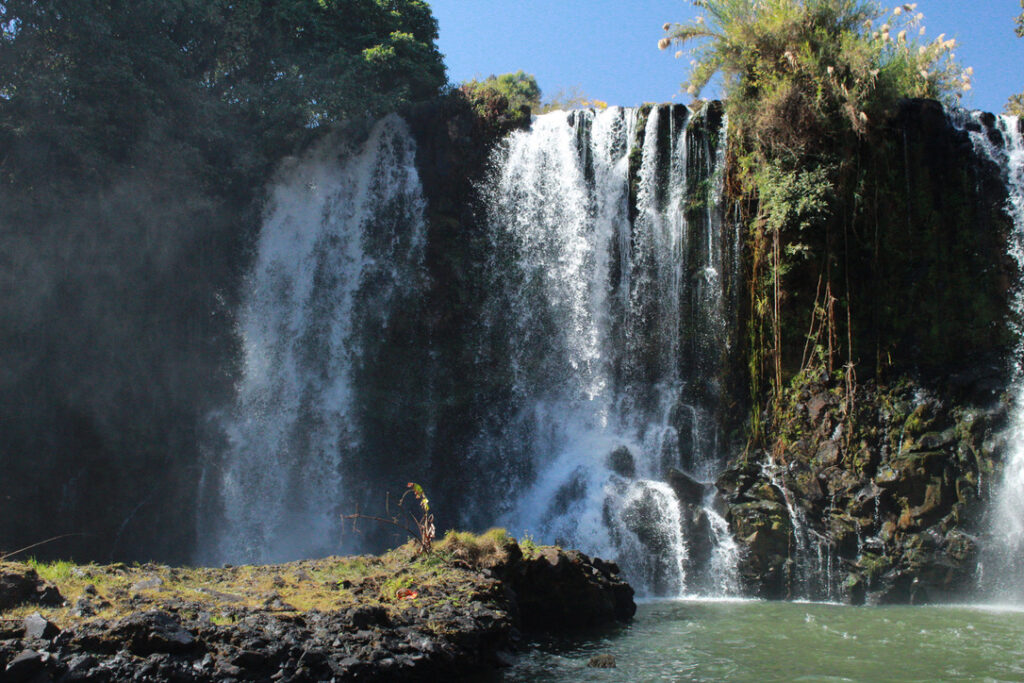
Week 4: Andasibe
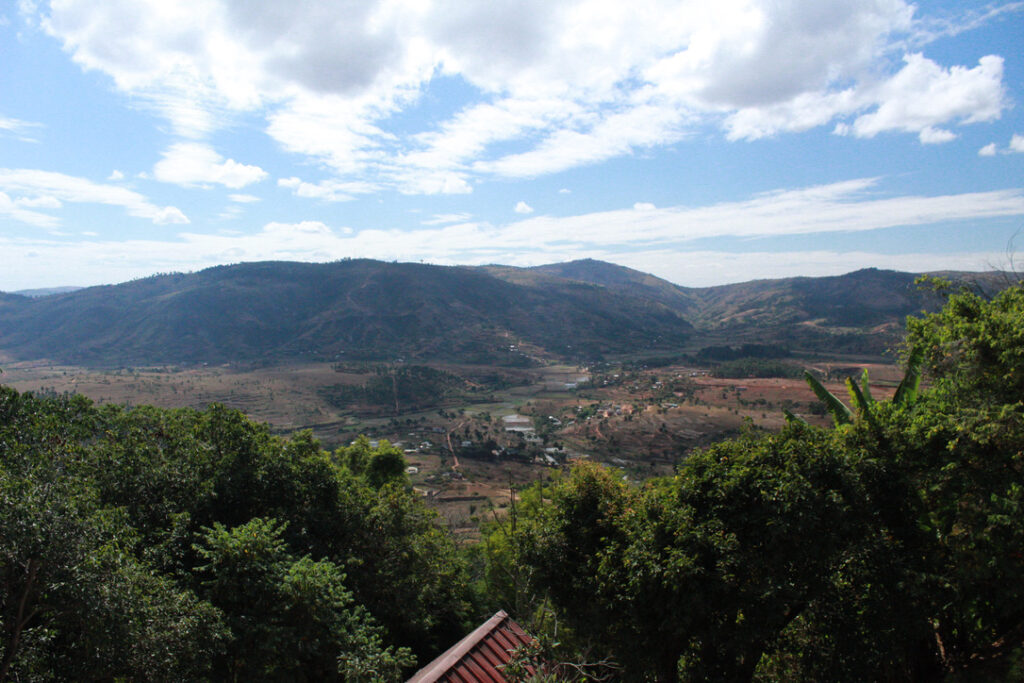
A few weeks later, we spent a week in Andasibe with different host families. Andasibe is a rural town surrounded by jungle, home to lemurs, chameleons, and a wide range of plants. Many tours are offered through the forest, and since my host mom was a guide, I was lucky to explore with her. Andasibe was stunning. In the evenings, the students and I often walked to the top of a hill to watch the sunset, pictured below.
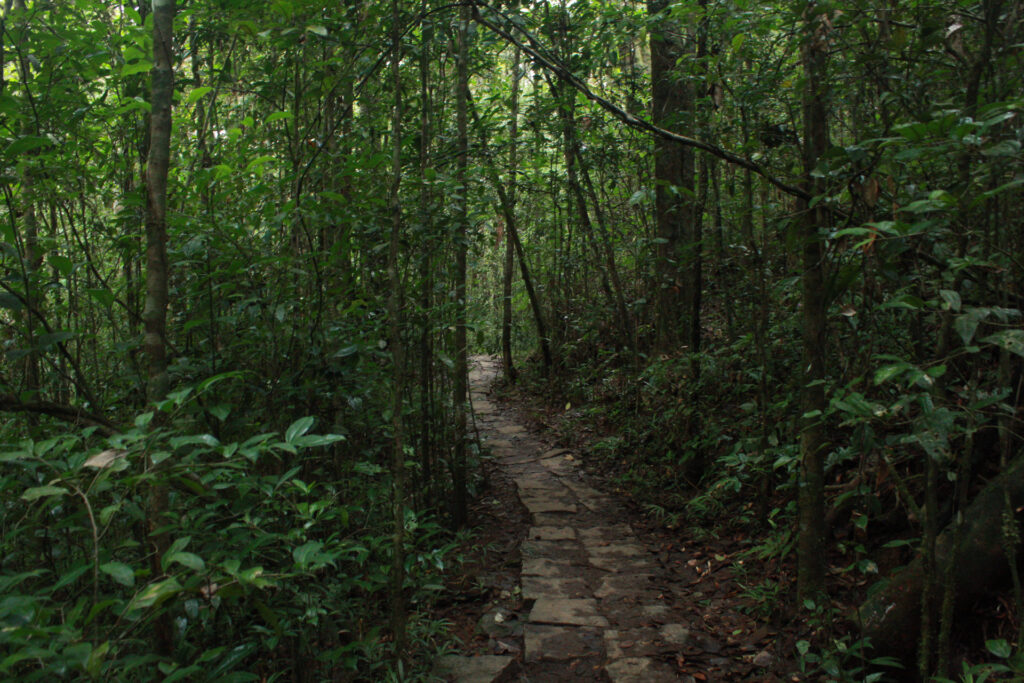
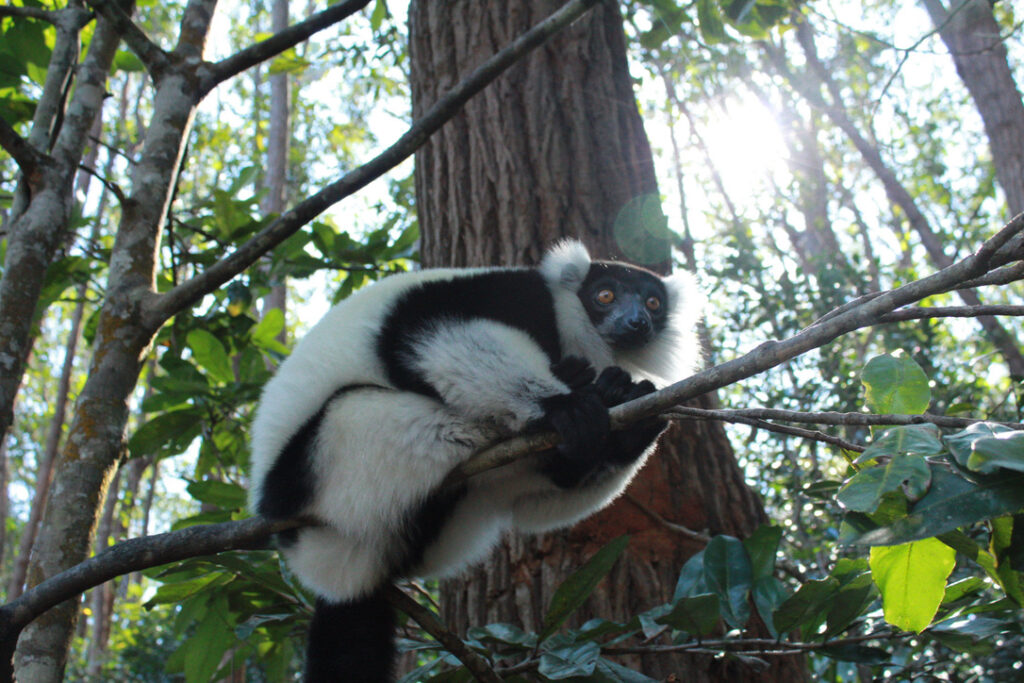
While Andasibe is rural, it is very accommodating to tourists, with a range of nearby hotels. To work on our research projects, the other students and I would often walk to the Lemur Lodge for some WiFi and delicious ginger tea.
It was in Andasibe that we learned how to cook traditional Malagasy street foods such as Mofogasy, Mofo Ramanonaka, Mofo Griffey, Mofbol, and Mofo Ravina. Mofo (mu-fu) means bread, and these dishes are all different forms of dough. Mofogasy, Mofo Ramanonaka, and Mofo Griffey are small (finished in a bite or two) and similar to a thick pancake. These three variations have differing amounts of flour, rice flour, water, and sugar, which alter them slightly. Mofbol is a fried doughy ball, similar to a doughnut. This was my favorite! Lastly, Mofo Ravina is banana-based dough cooked and steamed wrapped inside large banana leaves.
Week 5:
When we returned to Tana, it was time for Madagascar’s Independence Day on June 26. On the night of the 25th, the streets were filled with families holding red, white, and green lanterns (the colors of the flag) along with glowing toys. At midnight fireworks went off and we watched them on TV. The next day my host family and I went to a live music venue outside the city. At first I was again shy about dancing, but with their encouragement I joined in. The music was wonderful and the energy of the dancing was contagious.
Week 6: Morondava
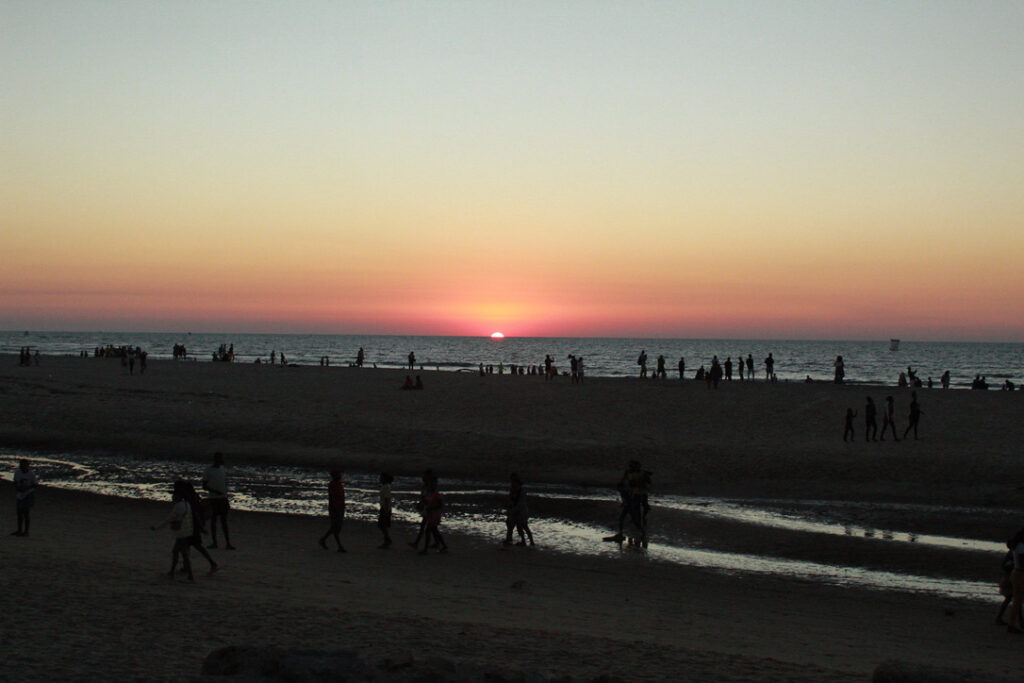
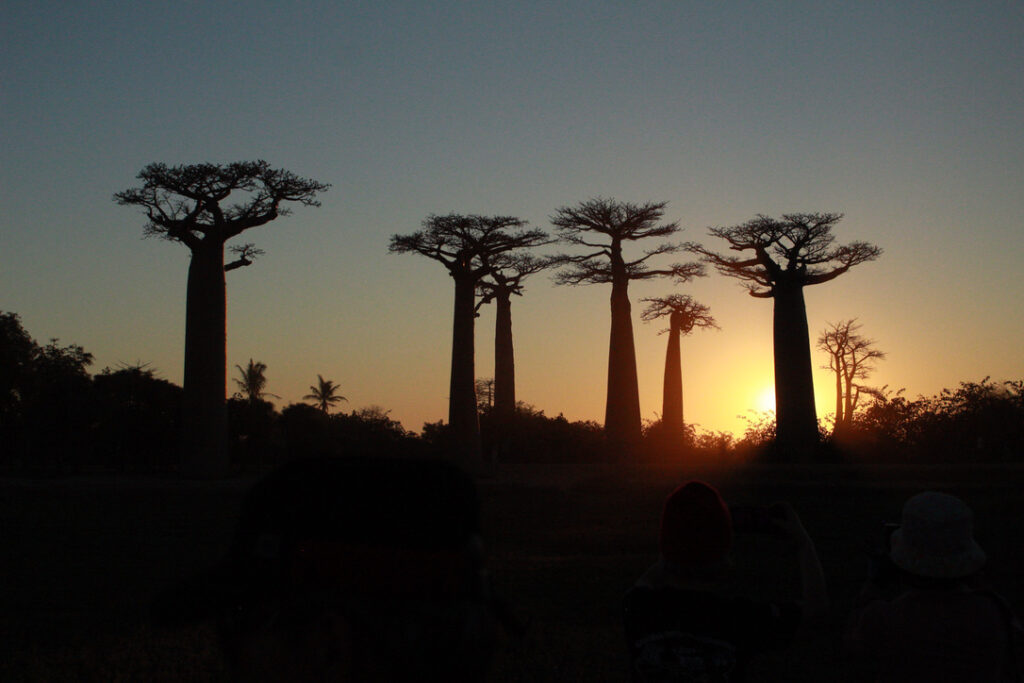
After that week in Tana, we traveled to Morondava, a beach town on the canal between Madagascar and the mainland and home to the famous and beautiful Avenue of Baobabs. Many tourists visit Madagascar just to see this avenue. We stayed in lodging right on the beach and I made some of my favorite memories of the trip. We swam in the sea, walked along the sand, and talked late into the night under the stars.
It was in Morondava that I bought my first traditional Malagasy Lambahoany. This is a cloth that women often wear around the waist, and it carries cultural, ancestral, and social meaning.
Final Days
After Morondava, we returned to Tana to give our final presentations and turn in our final reports, and left the country shortly after. Two days before our departure date, I cried a lot about leaving my host family. I hadn’t felt that type of grief since I was 14, leaving Germany after having lived there for three years. It was an interesting feeling; I had not known my host family for very long, nor had we been able to communicate very well, but I think I grew to love watching my host family interact with each other.
I also wanted to write a small note about my experience with safety. I did not feel unsafe in Madagascar as a young woman, but I was also almost always with my group. As foreigners, we often drew attention on the street; people sometimes asked for photos, made comments, or simply stared. The main risks we were warned about were petty theft and pickpocketing. We were told not to wear jewelry openly and to keep wallets in a fanny pack or money belt. Do not take photos out of a car window, as phones can be grabbed. There are also many stray dogs in the streets, which I avoided. Additionally, apart from the Fosa, which rarely interact with humans, and some spiders, there are no dangerous animals.
Notes and Lessons
Before I close, I want to share a few life lessons that stood out to me during my time there.
The first few relate to community and working with others.
- If you want to go far, go together. If you want to go fast, go alone.
- Do not compete, complement. Everyone has different strengths, and when we use them collectively, we not only reach our goals more effectively but also find the process more fulfilling.
- Shared joy is double the joy, and shared sorrow is half the sorrow.
The next few are related to self-kindness and balance.
- If you break your head, it is your head that is broken. Worrying excessively often hurts us more than the situation itself, and it prevents us from finding solutions.
- Understand your carrying capacity. We often push ourselves too far in achievement-oriented cultures, but knowing our limits can save us unnecessary suffering.
- Our capacity changes with the days, the seasons, and the years. Nature changes, and we are part of nature.
- Something that wasn’t explicitly expressed but something I really felt to be true while I was there: I am a work in progress, and therefore, I am enough. I do not need to be at some arbitrary and unattainable level of “complete” to be enough.